|
Joseph S. Salemi
_________________
LAUGHTER,
LEARNING, AND
THE CLASSROOM
___________________________________
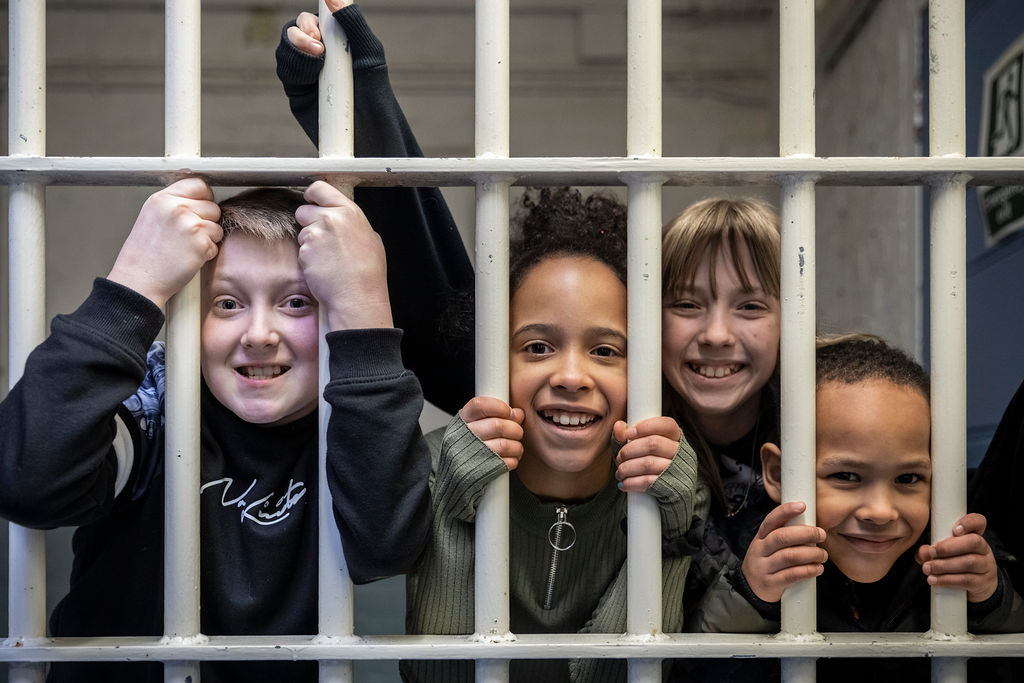 Laughter, said Edward Dahlberg, is like a well of cool sweet water,
refreshing and renewing us when we are parched and distempered. Without
laughter existence is brittle and hard-edged, and grows steadily more
unbearable. The accumulation of defeats and tragedies that we call life
would be galling without the salve of laughter, and as Erasmus showed in
his Praise of Folly, precious little dough rises in this world
without the leaven of hilarity. Laughter, said Edward Dahlberg, is like a well of cool sweet water,
refreshing and renewing us when we are parched and distempered. Without
laughter existence is brittle and hard-edged, and grows steadily more
unbearable. The accumulation of defeats and tragedies that we call life
would be galling without the salve of laughter, and as Erasmus showed in
his Praise of Folly, precious little dough rises in this world
without the leaven of hilarity.
Laughter
is particularly important in the process of education. The great
teachers, from Socrates to Comenius, knew that some of the most
effective tools of pedagogy are the joke, the wry remark, and the
humorous aside. Who does not remember some moment from his schooldays
when an instructor’s facetiousness made the class convulse with
laughter, and thereby rendered the lesson all the more memorable? I
wager that a good many students can recall only such lessons and such
moments, which stay fixed in their minds precisely because learning was
inextricably linked with an irrepressible comic response.
Sir
Henry Wotton, Provost of Eton in the early seventeenth century, went so
far as to judge a student’s potential by “with what kind of Jests or
pleasant Accidents he is most taken in others.” Wotton believed that a
student’s capacity for laughter “will discover the degree of his
apprehension.” These views were no doubt extreme, but they show the
value that past educators placed on a good sense of humor on both sides
of the lectern.
In
today’s classroom, however, laughter has fallen under a cloud of
suspicion and disapproval. As the process of education becomes
increasingly politicized—that is, more and more subject to ideological
scrutiny and censure—there are fewer and fewer occasions when genuinely
spontaneous laughter is safe. Licensed laughter (directed at approved
targets and confined to certain subjects) is permitted, but such
choreographed humor is mere pretense and a counterfeit. Real
laughter is perilous: it comes out of nowhere, bites its victims
randomly, and has no agenda other than to enjoy itself. It can’t, by its
very nature, be controlled or policed. In consequence, politically
correct academics and administrators view laughter as at best
unreliable, and at worst a menace. It is no accident that some of the
speech codes they have tried to foist on colleges today contain
strictures against “inappropriate laughter.”
The
literature on political correctness and its malignant influence is
massive and still growing, but few writers have bothered to define the
phenomenon after describing its all too obvious symptoms. Let me attempt
that now, with especial reference to laughter and learning.
Political correctness is a rabid, puritanical self-righteousness that
takes major disagreement on sociopolitical issues as a moral affront. It
sees philosophical differences as great sundering divides, over which
rifle fire is exchanged. It takes the punitive, uncompromising attitude
of an inquisitor towards dissent, and reflexively links opposition to
itself with stupidity, degeneracy, or malevolence. Disguising their
fanaticism as moral zeal, politically correct types are always angry,
congenitally judgmental, and utterly lacking in the equanimity that
makes humor possible. The zeal of such people also aims at a Nazi-like
Gleichschaltung (“co-ordination”) of all social activity and
discourse, whereby every public act, speech, or gesture is compelled to
conform itself to the dominant sociopolitical ideology.
You
think I exaggerate? Go to any faculty meeting at any American
university. Listen to the vicious feminist droning on about
gender-and-sex ratios in the curriculum. Listen to affirmative-action
hires complaining about the lack of more affirmative-action hires.
Listen to angry little theorists insisting on the mandatory review of
all syllabi to insure “proper approaches to teaching.” Listen to the
unending drivel about globalism and diversity and inclusion and
multicultural perspectives. Most conspicuously, notice from the pack of
them the whine of anger, resentment, intellectual revanchism, and above
all, moral outrage.
What
place can laughter have in such a worldview? Politically correct persons
are so ferociously serious about their opinions that any sort of levity
is bound to seem sacrilegious to them. And let me add that political
correctness is not limited to the liberal-left; some conservatives can
be just as preachy and moralistic from their side of the spectrum. What
unites all such types is an urgency of conviction that blots out the
possibility of comic distance and amused detachment whenever differences
of opinion arise. Show insufficient solemnity before one of their sacred
icons, and the specter of Queen Victoria murmuring “We are not amused”
will rise up before you.
Now the fact is one cannot have a stimulating undergraduate class
without a bit of irreverence, whether in the form of brief jokes, an
occasional anecdote, or even some salty language. These things are the
yeast, so to speak, in what otherwise might be a very flat and insipid
review of material. If you address a class of teenagers in the stilted
monotone common to an academic conference (where all the participants
are competing to see who can be the most primly soporific), they will
tune you out within five minutes. Nevertheless, because jokes,
anecdotes, and salty language are particularly vulnerable to
self-righteous reproach, they are becoming very rare in teaching today.
Here is a vivid instance of how generic political correctness (from the
liberal-left and the religious right) has impoverished the
American classroom. Rather than make some witty, off-the-cuff double
entendre, or some spontaneous wry comment, the professor will stick
to his prepared notes. Why risk enraging the feminist crank in the first
row, or the fervid evangelical in the back? The old economic law
applies: if you tax something, you get less of it. Placing penalties on
wit, humor, and playful raillery means that these things will disappear
from the classroom, and we shall have in their place the pious solemnity
of a prayer meeting.
Once when I was teaching a section of English literature, I was
distracted by the noise of singing and dancing in an adjacent classroom.
Out of pure pettishness, I rhetorically asked my students what the hell
was going on in the next room, not expecting an answer. But an earnest
undergraduate spoke up and said “A class in Caribbean literature meets
there, Professor.”
The opening was irresistible. “Caribbean literature,” I harrumphed. “Is
it written down?”
The effect on my class was electric. Smiles, titters, and giggles began
to break out until a crackle of laughter swept the room. I had said
something outrageously unfair, but in the context of my student’s
officious answer, and of the calypso wail coming from next door, it was
perfectly apt. Of course, I had also said something politically
incorrect—horrendously so. Despite the general laughter, one of two
puritanical faces in the class glared at me like Gorgons.
Occasions always present themselves for humor during a lecture, provided
one is open to the possibility of laughter. Several years ago I taught a
course in which, among other plays, John Millington Synge’s Riders to
the Sea was assigned. A brief drama about tragic death in the west
of Ireland, it contains a great deal of keening—i.e. the mournful,
high-pitched lamentations of Irish peasant women. We read the play
aloud, and whenever the stage directions called for keening, I would let
out a long, ululating quaver from the back of my throat. The class broke
up in laughter every time I did this. Were Irish students offended by my
irreverence towards Synge and Hibernian womanhood? I don’t know, and I
don’t care. But I’m certain that the class thoroughly enjoyed Riders
to the Sea, and they probably remember it to this day.
So many of the complaints against political correctness deal with
instances of active indoctrination and persecution that we easily
overlook a much more insidious phenomenon: College is becoming a
bore. Political correctness has made everyone so circumspect in
speech and thought that there is little chance for higher education to
be the intellectually stimulating experience it was meant to be. It
becomes instead, for both instructor and student, a walk through a
minefield where one tiptoes gingerly around warning signs put up by a
spectrum of aggrieved groups and certified victims. This is a tedious,
exasperating business, and it encourages everything that university
studies were supposed to counteract: prudishness, timeserving,
self-censorship, and conventional pieties.
It also encourages a certain type of faculty member: the slick
careerist. More and more, the typical college teacher has come to be a
silent compromise between politically correct stridency and reactive
anger against it. He is neither outrageously left-liberal nor
forthrightly conservative. His entire persona is a kind of negotiated
neutrality, with smiles for everyone, commitment to nothing, and
supersensitive antennae for shifts in consensus. Political correctness
has produced a generation of play-it-safe types who in their blandness
and vacuity resemble nothing so much as corporate middle management.
These careful gamesters watch for trends, angle for advancement, and
never risk a sentence that might cost them someone’s good will or
favorable opinion. It takes an effort of the imagination to see these
grant-scrounging departmental yes-men as the heirs of Petrarch and
Ascham, and yet they represent the predominant type of faculty member in
the humanities today.
A faculty of this sort is bound to be boring. And a boring faculty makes
for demoralized, angry students who will at some point explode. Think of
the luckless St. Cassian of Imola, a Christian teacher of rhetoric who
was martyred in the fourth century. Cassian was stabbed to death by
enraged students wielding metal styli, the standard implements for
note-taking at that time. His statue (which ought to be in every faculty
lounge as a monitory device) portrays a Sebastian-like fellow in
academic robes, with dozens of these sharp iron pens embedded in his
flesh.
St. Cassian, I suspect, was a bore—he probably was killed more for his
failings as a pedagogue than for his devotion to the faith. Nothing
enrages students more than being required to sit through an hour and a
half of unrelieved tedium dispensed by some self-absorbed professor. If
Cassian was also woodenly humorless, never allowing the least levity in
his classroom, I don’t wonder at his fate.
Younger faculty are the worst offenders in this respect. Newly minted
assistant professors hot from the fires of graduate school often decide
that their freshmen should hear all about the latest theoretical trends
that were embodied in their dissertations. I knew one dimwitted fellow
at New York University who made his Intro-to-Lit class read long
selections from Derrida, Foucault, and Lacan. His students would
congregate on the couch outside my office and commiserate with each
other, lamenting the sheer impenetrability of these texts and their
utter irrelevance to the study of literature. I felt sorry for these
students, but even more did I pity the faculty member, so caught up in
trendy theorizing that he could not see the resentment of his class,
their palpable anger at not being taught. Had he allowed himself a
single joke about the material he discussed, he might have won the class
over. But he could not—Derrida, Foucault, and Lacan were gods to him,
and one does not snicker at one’s religion.
This inability to laugh, coupled with the prohibition of comic
spontaneity that political correctness imposes on the college classroom,
are why the lights have gone out in higher learning today. No one
laughs—no one even dares to smile. Granted, there is little left in the
academy to rejoice over, but what I would not give to hear a gust of
unrestrained Rabelaisian laughter! How it would blow away the parched,
dessicating ideologies that have left American education a pinched and
dyspeptic bore! Without this breath of fresh air, all that teachers and
students have to look forward to is a fate analogous to St. Cassian’s:
ennui, animosity, and mirthless martyrdom.
§
§ §
Return to Main Menu
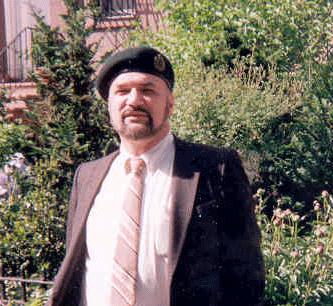
Joseph
S. Salemi has published poems, translations,
and scholarly articles in over one hundred journals throughout the
United States, Canada, and Great Britain. His four collections of poetry
are Formal Complaints and Nonsense Couplets, issued by
Somers Rocks Press, Masquerade from Pivot Press, and The
Lilacs on Good Friday from
The New Formalist Press. He has translated poems from a wide range
of Greek and Roman authors, including Catullus, Martial, Juvenal,
Horace, Propertius, Ausonius, Theognis, and Philodemus. In addition, he
has published extensive translations, with scholarly commentary and
annotations, from Renaissance texts such as the Faunus poems of
Pietro Bembo, The Facetiae of Poggio Bracciolini, and the Latin
verse of Castiglione. He is a recipient of a Herbert Musurillo
Scholarship, a Lane Cooper Fellowship, an N.E.H. Fellowship, and the
1993 Classical and Modern Literature Award. He is also a four-time
finalist for the Howard Nemerov Prize. His upcoming books,
Gallery of Ethopaths, and a collection of critical essays, are forthcoming. |